




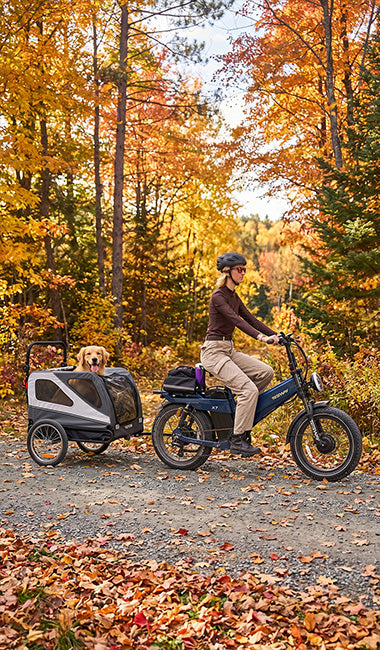
We selected several electric bikes that suit Canadian roads, weather, and riding needs. The picks cover city commuting, cargo use, long distance travel, gravel roads, and off-road riding. Each model is compared by range, power, comfort, weight, and practical use to help you find the right electric bike.
The Best Electric Bikes in Canada
| Electric Bike | Best For | Motor | Battery and Maximum Range | Main Strength |
|---|---|---|---|---|
| Tesway X7 AWD | Long distance and mixed-terrain riding | Dual motors, 3600W peak | 52V 60Ah, up to 320 km | Huge battery and AWD traction |
| Radster Trail | Everyday commuting | 500W, up to 100 Nm | Up to 105 km | Smooth power and balanced handling |
| Tesway X5 AWD | Step-through long-range riding | Dual motors, 3600W peak | 52V 60Ah, up to 320 km | Easy mounting with strong performance |
| Specialized Turbo Vado SL 2 4.0 EQ | Lightweight city riding | Specialized SL system | Up to five hours of assistance | Low weight and natural ride feel |
| RadRunner Max | Cargo and family use | 500W, up to 80 Nm | Up to 200 km with range extender | Flexible cargo setup |
| Tesway X9 Ultra | High power trail riding | Dual motors, 4000W peak | 60V 30Ah, up to 193 km | 240 Nm torque and full suspension |
Maximum range figures assume favorable conditions. Cold weather, hills, wind, cargo, speed, and high assistance levels can reduce real distance.
How We Chose the Best Electric Bikes in Canada
The bikes were compared by battery capacity, motor output, frame style, tires, suspension, brakes, weight, carrying ability, Canadian availability, and intended use. We also considered cold temperatures, damaged pavement, steep streets, gravel roads, wet weather, and limited storage.
No model is best for everyone. A long-range fat tire bike is harder to lift, while a light commuter cannot match its traction or load support. Each pick below has a clear purpose.
1. Tesway X7 AWD: Best Long Range Electric Bike in Canada
The Tesway X7 AWD long range electric bike is the strongest choice for riders who need far more range than a normal commuter can provide. Its 52V 60Ah battery stores about 3,120Wh and supports up to 320 kilometers of pedal assist range under suitable conditions. That large reserve gives riders more room for hills, cold weather, cargo, and long rural routes.
Front and rear hub motors deliver up to 3600W peak power and 200 Nm of torque. Power through both wheels can improve traction on loose gravel, sand, wet ground, and uneven climbs. Full suspension and four-inch fat tires soften potholes, roots, and broken pavement, while hydraulic disc brakes provide the stopping control needed for a heavy bike with a 400-pound load rating.
The main drawback is weight. The X7 AWD is not suited to apartment stairs, light vehicle racks, or frequent lifting. Its motor output also exceeds the public-road electric bike limits used in Ontario and Quebec. It makes more sense for private property, permitted trails, rural routes, and places where its power is allowed. For the right rider, it offers an unusual mix of range, AWD grip, comfort, and carrying ability.
2. Radster Trail: Best Electric Bike for Everyday Canadian Riding
The Radster Trail is the more practical choice for commuting, shopping, bike paths, and weekend rides on pavement or packed gravel. Its Canadian version uses a 500W rear hub motor with up to 100 Nm of torque, giving it useful hill support without the weight and battery use of a dual-motor system.
A torque sensor changes support based on how hard the rider pedals, so starts, corners, and low-speed riding feel smooth. The three-inch tires add grip on cracked streets and gravel without feeling as slow as four-inch fat tires. A suspension fork and hydraulic disc brakes further improve control on rough or wet roads.
Rad gives the bike a maximum range of 65 miles, or about 105 kilometers. That is enough for most daily commutes, although winter and high assistance can shorten it. The Radster Trail cannot match the X7 AWD for battery size or rough-terrain traction, but it is easier to store, transport, and use as a regular city bike.
3. Tesway X5 AWD: Best Step-Through Long-Range Electric Bike
The Tesway X5 AWD brings the same long-range idea as the X7 AWD to a step-through frame. The lower frame makes mounting easier for shorter riders, older adults, people with limited hip movement, delivery riders, and anyone carrying bags on the rear.
It uses a 52V 60Ah battery with up to 320 kilometers of pedal assist range, plus dual motors with 3600W peak power and 200 Nm of torque. The battery supports 8A fast charging, while AWD helps on hills and loose ground. Dual suspension, fat tires, and hydraulic disc brakes suit rougher routes.
The low frame does not make the X5 AWD a light city cruiser. It is still a large, powerful bike that needs secure ground-level storage and a heavy-duty transport rack. Its output may also place it outside normal public-road rules in some provinces. Choose it when easy mounting matters but you still want long range, strong climbing support, and AWD traction.
4. Specialized Turbo Vado SL 2 4.0 EQ: Best Lightweight Commuter
The Specialized Turbo Vado SL 2 4.0 EQ is for riders who want an electric bike that still feels close to a regular bicycle. Its lightweight alloy frame, compact motor system, and natural handling make it easier to steer, pedal without assistance, load onto a rack, and store than the heavier fat tire bikes here.
The SL system provides support without the hard push often felt from powerful hub motors. Specialized rates the platform for up to five hours of assisted riding, while Future Shock helps reduce vibration at the handlebar. The EQ version is prepared for commuting rather than sold as a bare fitness bike.
The main limit is price. It was C$4,399.99 when researched, far above many direct-to-consumer models. That cost pays for lower weight, refined handling, clean motor integration, and dealer support. It is not ideal for deep snow, soft sand, or heavy cargo, but it is a strong choice for riders who value low weight and a natural bike feel.
5. RadRunner Max: Best Cargo Electric Bike in Canada
The RadRunner Max is designed for riders who want to replace more car trips. Its extended rear area can carry groceries, work equipment, bags, or a passenger when the correct accessories are installed. The low frame and compact wheel layout keep the load closer to the ground, helping the bike feel stable at low speed.
Its 500W motor produces up to 80 Nm of torque, and the torque sensor adjusts assistance to pedal pressure. The standard 672Wh battery handles normal utility trips, while an optional range extender raises the combined maximum range to 200 kilometers. Passcode protection and Apple Find My add useful security.
The RadRunner Max is heavier and less agile than a standard commuter, so it makes sense only when the cargo platform will be used often. Buyers should include passenger seats, baskets, foot supports, and other accessories in the budget. At about C$2,999 when researched, it is the strongest pick here for shopping, family use, and everyday hauling.
6. Tesway X9 Ultra: Best High-Power Electric Bike for Trail Riding
The Tesway X9 Ultra 4000w electric bike is built for riders who place climbing power, suspension, and braking ahead of low weight. Its 60V dual-motor system delivers up to 4000W peak power and 240 Nm of torque, making it the most powerful bike in this comparison.
The 60V 30Ah battery supports up to 120 miles, or about 193 kilometers, of pedal assist range under suitable conditions. Full suspension helps over roots, stones, and ruts. Four-piston hydraulic brakes add stronger stopping support, while 26-by-4-inch fat tires improve grip on loose terrain. NFC unlocking is another useful detail.
The X9 Ultra is not a simple downtown commuter. It is heavy, fast, and above the motor limits used for standard public-road electric bikes in several provinces. It is better suited to private land and approved off-road areas. Choose it when trail power, climbing torque, full suspension, and strong brakes matter more than easy storage.
How to Choose the Best Electric Bike in Canada
Choose a Bike for Your Main Route
Start with the route you ride most often. A paved commute calls for efficient tires, manageable weight, lights, fenders, and smooth pedal support. Gravel and damaged streets benefit from wider tires and front suspension. Snow, sand, and soft ground may justify fat tires or AWD, but both add weight and use more battery.
Avoid buying for one extreme trip you may take each year. A 50-kilogram fat tire bike can be fun on a trail but frustrating during a short daily commute, especially when stairs or transit are involved.
Compare Battery Capacity and Real Range
Maximum range is useful for comparison, not a promise. Multiply voltage by amp-hours to estimate watt-hours. A 48V 15Ah battery stores about 720Wh, while a 52V 60Ah battery stores about 3,120Wh.
A larger battery usually supports longer rides, but weight, tire width, motor count, speed, and terrain affect energy use. Choose enough extra capacity for hills, wind, cold weather, and detours rather than planning around the maximum figure.
Check Motor Power and Provincial Rules
Rules are not identical across Canada. Ontario requires a maximum assisted speed of 32 km/h and a motor no stronger than 500W. Quebec also limits public-road electric bikes to 500W and requires assistance to stop by 32 km/h.
A high-power bike may be allowed on private property or certain approved routes, but lowering its speed setting does not always change its classification. Check provincial, city, park, and trail rules before buying.
Plan for Cold Weather
Cold temperatures can shorten battery range, so winter riders need a larger reserve. A removable battery is useful when the bike is stored in an unheated garage or shed. Bring it indoors and follow the maker’s charging-temperature guidance.
Do not charge a battery that is frozen, wet, damaged, swollen, cracked, unusually hot, or producing an unusual smell. Winter also makes tire grip, lights, brake control, and regular cleaning more important.
Match Tires, Suspension, and Brakes to the Ride
Narrow tires are efficient on smooth pavement. Tires around 2.2 to 3 inches add comfort and grip without the full weight of a fat tire. Four-inch tires work better on snow, sand, and loose ground but feel slower and cost more to replace.
A suspension fork is enough for many commuters. Full suspension makes more sense for repeated trail impacts and rough rural roads. Hydraulic disc brakes are a strong choice for electric bikes, while heavy cargo and high-power models may benefit from larger rotors or four-piston calipers.
Check Weight, Storage, and Canadian Support
Think about stairs, elevators, doorways, storage space, car racks, and whether one person can move the bike safely. Removing the battery helps, but a large frame may still be difficult to lift.
Check whether batteries, chargers, displays, controllers, brake parts, and motor components can be ordered in Canada. Local shops can handle many mechanical parts, but they may not repair a brand-specific electrical system. Clear warranty terms and replacement parts can matter more than a small price difference.
How Much Should You Spend on an Electric Bike in Canada?
Electric bikes below C$1,500 often use smaller batteries, simpler displays, basic brakes, and limited service support. They can work for short, flat rides, but battery quality and parts availability need careful checking.
Between C$2,000 and C$3,000, buyers can find capable commuter, cargo, fat tire, and long-range models with hydraulic brakes, larger batteries, torque sensors, or suspension. Above C$4,000, the extra cost often pays for lower weight, premium motor systems, refined frames, and established dealer support.
The best value is not always the cheapest bike. A model that fits your route, storage, and service needs will usually be worth more than a cheaper option that is difficult to use or repair.
Conclusion
The Tesway X7 AWD is the best long-range choice in this guide, with a 52V 60Ah battery, AWD traction, full suspension, and up to 320 kilometers of pedal assist range. The Radster Trail is better for regular commuting and public-road riding, while the Specialized Turbo Vado SL 2 suits riders who want low weight and a natural bike feel. Match the bike to your usual route, local rules, storage space, and winter needs rather than choosing by motor size alone.
FAQs
What Is the Best Electric Bike in Canada for Winter?
A model with wide tires, hydraulic brakes, a removable battery, and good low-speed control works best. AWD can help on loose snow, but tire choice and careful riding still matter more than motor power alone.
Is a 750W Electric Bike Legal in Canada?
Rules vary by province. Ontario and Quebec limit standard public-road electric bikes to 500W and 32 km/h. Check local rules before riding a higher-power model on roads or bike paths.
What Is a Good Electric Bike Range in Canada?
About 60 to 100 kilometers is enough for many commuters. Long-distance riders may want a larger battery to leave more room for hills, cargo, wind, and cold-weather range loss.

