




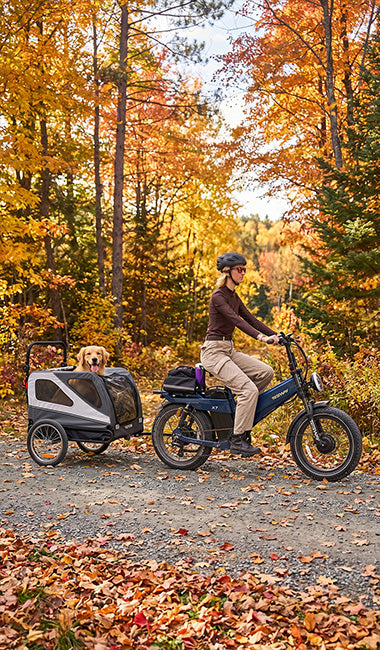
Turning a regular bike into an electric bike is not just about buying a motor kit. The better question is whether your bike can handle the extra power, weight, speed, and braking demand. A good build starts with the right frame, then the right motor, battery, controller, sensors, brakes, and tires. For Canadian riders, the setup also needs to match local electric bike limits, where many provinces use 500W and 32 km/h as key road rules.
Start With a Bike Worth Converting
The bike comes first. A strong conversion starts with a bike that already rides well without power.
Hybrid bikes, hardtail mountain bikes, commuter bikes, and steel touring bikes are usually the easiest to convert. They have stronger frames, better tire clearance, and more room for a battery. They also feel more stable once you add motor weight.
A weak bike is not worth saving with a motor. If the frame is cracked, the wheels are loose, the brakes are poor, or the bike does not fit you, do not build on it. A motor will not fix those problems. It will make them worse.
Carbon road bikes are also not the best choice for most DIY builds. They are light, but they are not ideal for hub motor axle stress, battery mounts, and extra clamping force. If you want a simple and safe build, choose a strong aluminum or steel frame.
Choose the Right Motor Type
The motor decides how the bike feels. Most conversion kits use a front hub motor, rear hub motor, or mid drive motor.
A front hub motor is the easiest to install. You replace the front wheel, mount the battery, connect the controller, and set up the display. It works for flat city rides and light commuting. The downside is handling. Because the front wheel pulls the bike, it can feel less stable on wet roads, gravel, snow, and loose pavement.
A rear hub motor feels more natural for most riders. Power comes from the back, so starts feel smoother and the bike feels more balanced. It is a good choice for commuting, light hills, and daily rides. The install is a little harder because you need to match the rear gears, axle spacing, brake rotor, and wheel size.
A mid drive motor sits near the pedals and uses the bike’s gears. This is the better choice for hills, heavier riders, and longer routes with mixed terrain. It keeps weight near the center of the bike and climbs better when you use the right gear. The tradeoff is cost, setup time, and more wear on the chain and cassette.
For most riders, a rear hub motor is the best middle choice. It is easier than a mid drive and more stable than a front hub.
Pick Motor Power for Canadian Riding
Do not buy the biggest motor just because it looks stronger. In Canada, many road electric bike rules focus on 500W maximum motor output and 32 km/h maximum assisted speed.
For flat roads, short rides, and lighter riders, 250W to 350W can be enough. For commuting, small hills, headwinds, and heavier riders, 500W makes more sense.
A 750W or 1000W kit may sound better, but it can make the bike harder to control, drain the battery faster, and create legal problems on public roads. More power also puts more stress on the frame, fork, dropouts, spokes, brakes, and tires.
Choose power by your route, not by the biggest number on the product page.
Choose the Right Battery Size
The battery decides your range and adds most of the weight. Battery size is measured in watt hours, or Wh. You can estimate it by multiplying volts by amp hours.
A 36V 10Ah battery is about 360Wh. That can work for short rides. A 48V 15Ah battery is about 720Wh, which is better for commuting. A 48V 20Ah battery is about 960Wh, which makes more sense for hills, cargo, cold weather, and longer rides.
For Canada, do not choose the smallest battery possible. Cold weather can reduce range. Hills, wind, heavier clothing, and frequent stops also use more energy. If your normal ride is 25 km, choose a battery that can comfortably handle more than 25 km.
Battery position matters too. A battery mounted on the lower frame usually feels better because the weight sits low and near the center. A rear rack battery can work, but it makes the bike feel heavier at the back.
Match the Battery, Controller, and Display
The motor, battery, controller, and display need to work together. A 48V motor should use a compatible 48V battery and controller. A 52V system needs parts rated for 52V. Do not mix random parts just because the plugs look similar.
The controller controls how power reaches the motor. A smooth controller makes the bike feel calm. A poor controller can make the bike jump forward, surge, or feel rough at low speed.
The display should be simple. You need assist levels, battery level, speed, and basic ride data. A fancy screen is not as important as clean wiring, stable power delivery, and easy controls.
If you are new to conversions, buy a kit where the motor, controller, display, and sensors are already matched. It saves time and avoids many small problems.
Choose Pedal Assist or Throttle
Pedal assist turns on motor support when you pedal. This keeps the bike feeling like a bike. It also helps save battery because the motor supports your effort instead of replacing it.
A throttle gives power without pedaling. It can help when starting from a stop, carrying cargo, or riding with knee pain. But throttle rules can vary by province and electric bike type.
For most builds, choose pedal assist first. Add throttle only if it fits your local rules and riding needs.
Upgrade Brakes, Tires, and Wheels
A converted bike is heavier and faster than the original bike. That means stopping power matters.
Disc brakes are the better choice. Mechanical disc brakes can work if they are adjusted well. Hydraulic disc brakes feel stronger and smoother, especially in rain, traffic, and downhill riding.
Rim brakes can work on a light city conversion, but they are not ideal for heavier builds. If your brake pads are old, your cables feel soft, or your wheels are worn, fix those before adding a motor.
Tires also change the ride. Narrow tires can feel harsh on a heavier bike. Wider tires give more comfort, grip, and control. For Canadian roads, choose tires that can handle rough pavement, wet weather, and small debris.
For hub motor builds, wheel strength matters. A hub motor wheel should have strong spokes and proper tension. Loose spokes can become a problem fast once motor torque is added.
How Much Weight Will the Conversion Add?
Most electric bike conversions add weight from the motor, battery, controller, wiring, display, and mounts. A light setup may add around 10 to 15 lb. A stronger setup with a bigger battery can add 20 lb or more.
That extra weight changes the bike. It may feel harder to lift, harder to carry upstairs, and slower to ride with the motor off. It may also need more distance to stop.
This is why part choice matters. A small city bike does not need a huge battery and heavy motor. A commuter bike for long rides needs more battery, better brakes, and stronger tires. Build for the ride you actually do.
Is It Cheaper to Convert a Bike or Buy an Electric Bike?
Converting a bike can be cheaper if you already own a strong bike, have tools, and enjoy setup work. But the cost grows quickly. A good kit, safe battery, charger, controller, display, brake sensors, torque arms, tools, tires, and brake upgrades can cost more than expected.
Buying a complete electric bike makes more sense if you want matched parts, cleaner wiring, stronger factory support, and less setup work. For riders who want longer range and stronger performance without building from separate parts, a Tesway offroad long range ebike is a practical choice. The Tesway X7 AWD uses dual motors with 3600W peak power, 200Nm torque, a 52V 60Ah battery, and up to 200 miles of pedal assist range.
For riders who want more outdoor power, the Tesway X9 Ultra uses a 60V dual motor system, 4000W peak power, 120Nm x 2 torque, a 60V 30Ah battery, full suspension, and up to 120 miles of pedal assist range.
A conversion is better if you enjoy building and already have the right bike. A complete electric bike is better if you want a stronger finished setup from the start. For road riding in Canada, always check local rules before using any high power electric bike.
Final Thoughts
To turn a regular bike into an electric bike, focus on parts that fit your bike and your ride. Start with a strong frame. Choose the right motor type. Pick a safe battery with enough range. Match the controller, display, pedal assist, brakes, tires, and wheels. Do not chase the biggest motor if the bike cannot handle it. A good conversion should feel smooth, stable, and easy to stop. That matters more than raw power.
FAQs
Can any bike be turned into an electric bike?
Many bikes can be converted, but not every bike should be. Use a bike with a strong frame, safe brakes, good wheels, and enough battery space.
What is the best motor for an electric bike conversion?
A rear hub motor is best for most riders. It feels balanced, works well for commuting, and is easier to install than a mid drive.
How big should my electric bike battery be?
For short rides, 400Wh to 500Wh can work. For longer commutes, hills, cargo, or cold Canadian weather, 700Wh to 900Wh is better.

